






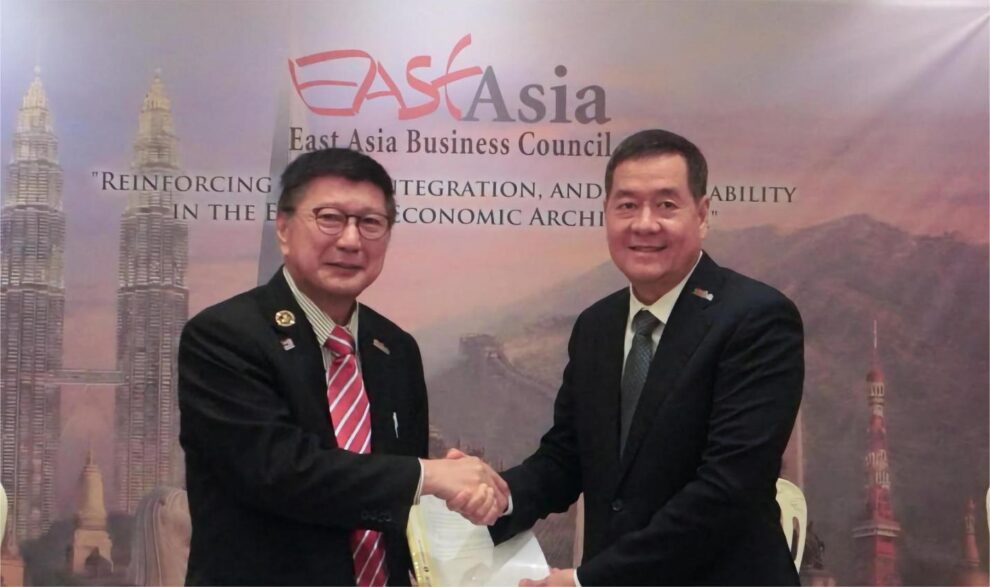

The East Asia Business Council (EABC) marked the handover of its Chairmanship today from Malaysia and China to the Philippines and Japan for 2026, reaffirming the Council’s commitment to practical private sector engagement in support of ASEAN Plus Three economic cooperation, regional trade and investment, and a stable and predictable business environment.
The outgoing Chairmanship, led by Malaysia with China as Co-chair, provided a review of EABC’s 2025 work programme, which focused on delivering practical recommendations to help businesses navigate rising trade uncertainty, supply chain pressures, and growing protectionism across the region.
A key deliverable under the 2025 work programme was the EABC JETRO Business Outlook Survey, which recorded a record 535 responses from companies across ASEAN Plus Three. Survey findings pointed to cautious business sentiment, persistent cost pressures, and a continued need to strengthen practical know-how and confidence in utilising the Regional Comprehensive Economic Partnership (RCEP), particularly among smaller firms.
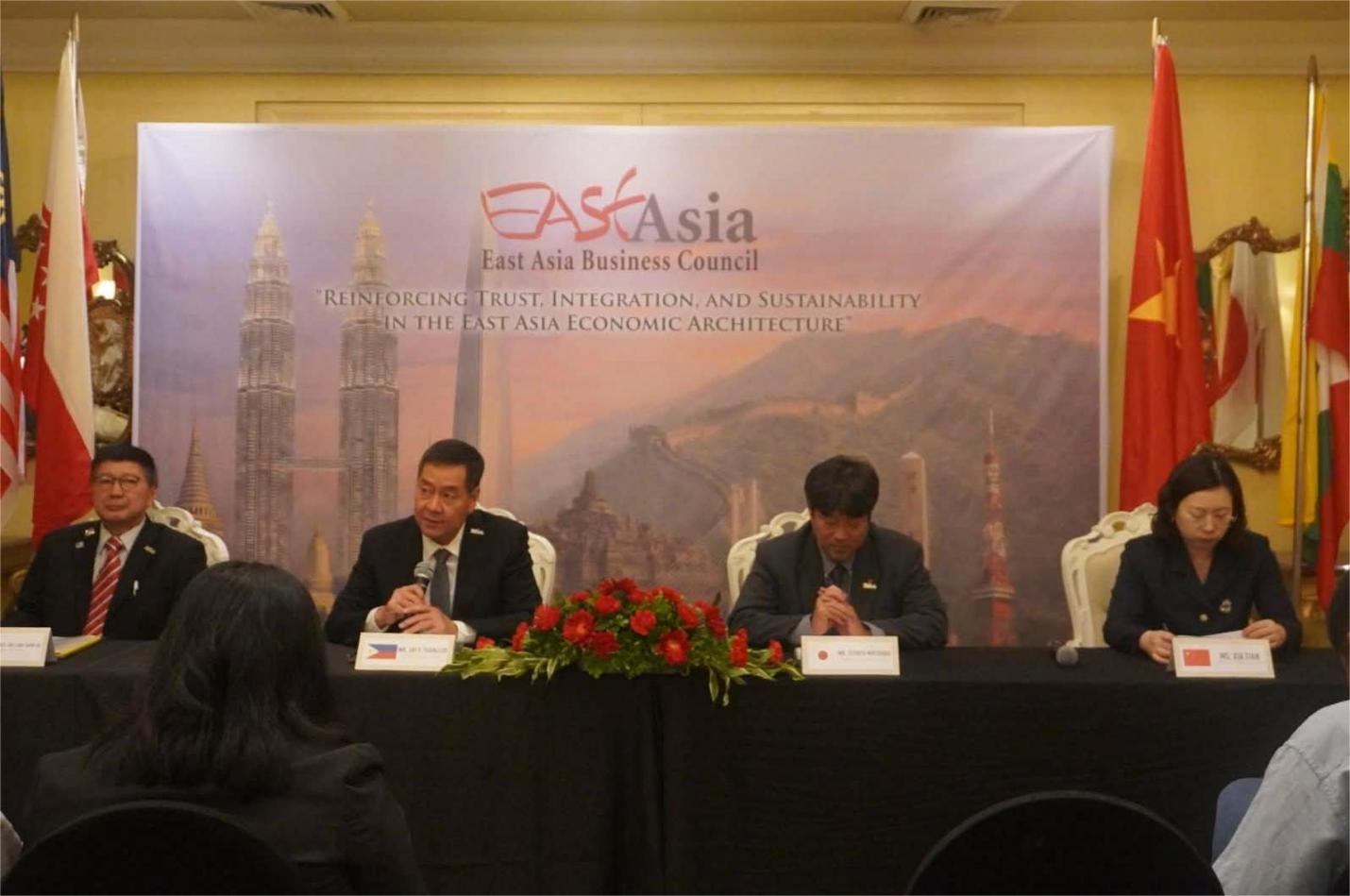
Hand over of EABC Chairmanship. (L-R) EABC 2025 Chairman Tan Sri Dato’ (Dr) Soh Thian Lai (Malaysia), EABC 2026 Chairman Jay Y. Yuvallos (Philippines), EABC 2026 Co-Chair Tetsuya Matsuoka (Japan, and EABC 2025 Co-Chair Xia Tian (China)
In response to these business concerns, EABC’s 2025 engagement prioritised strengthening supply chain resilience, accelerating digitalisation, improving trade facilitation, and ensuring micro, small and medium enterprises (MSMEs) are supported through the region’s sustainability transition. The Council also advanced implementation focused proposals, including the digitalisation of Certificates of Origin and trade documentation, wider use of tools such as the ASEAN Tariff Finder, and closer coordination to reduce friction for companies operating across multiple markets.

The incoming 2026 Chairmanship will be led by Mr Jay Y. Yuvallos as EABC Chair 2026 and Mr Tetsuya Matsuoka as EABC Co chair 2026. Under the theme Reinforcing Trust, Integration, and Sustainability in the East Asia Economic Architecture, the new Chairmanship is expected to build on EABC’s ongoing work on sustainability, stronger regional value chain integration, improved RCEP utilisation, and investor confidence through sound governance and a stable operating environment, with specific priorities and deliverables to be agreed by EABC members.
About the East Asia Business Council (EABC)
The East Asia Business Council (EABC) was established in 2003 following recommendations by the East Asia Study Group and was endorsed by ASEAN Plus Three Leaders, giving the Council an official mandate to represent the private sector in advancing regional integration and cooperation. The Council is composed of senior business leaders from ASEAN member states, together with China, Japan, and the Republic of Korea. Each economy nominates 3 representatives, including 1 from the small and medium enterprise sector, ensuring that diverse business perspectives are represented.
EABC’s mandate is to provide private sector recommendations that shape ASEAN Plus Three economic cooperation, build stronger business links across East Asia by promoting trade, investment and collaboration, and support inclusive, sustainable and innovative growth for businesses across the region.