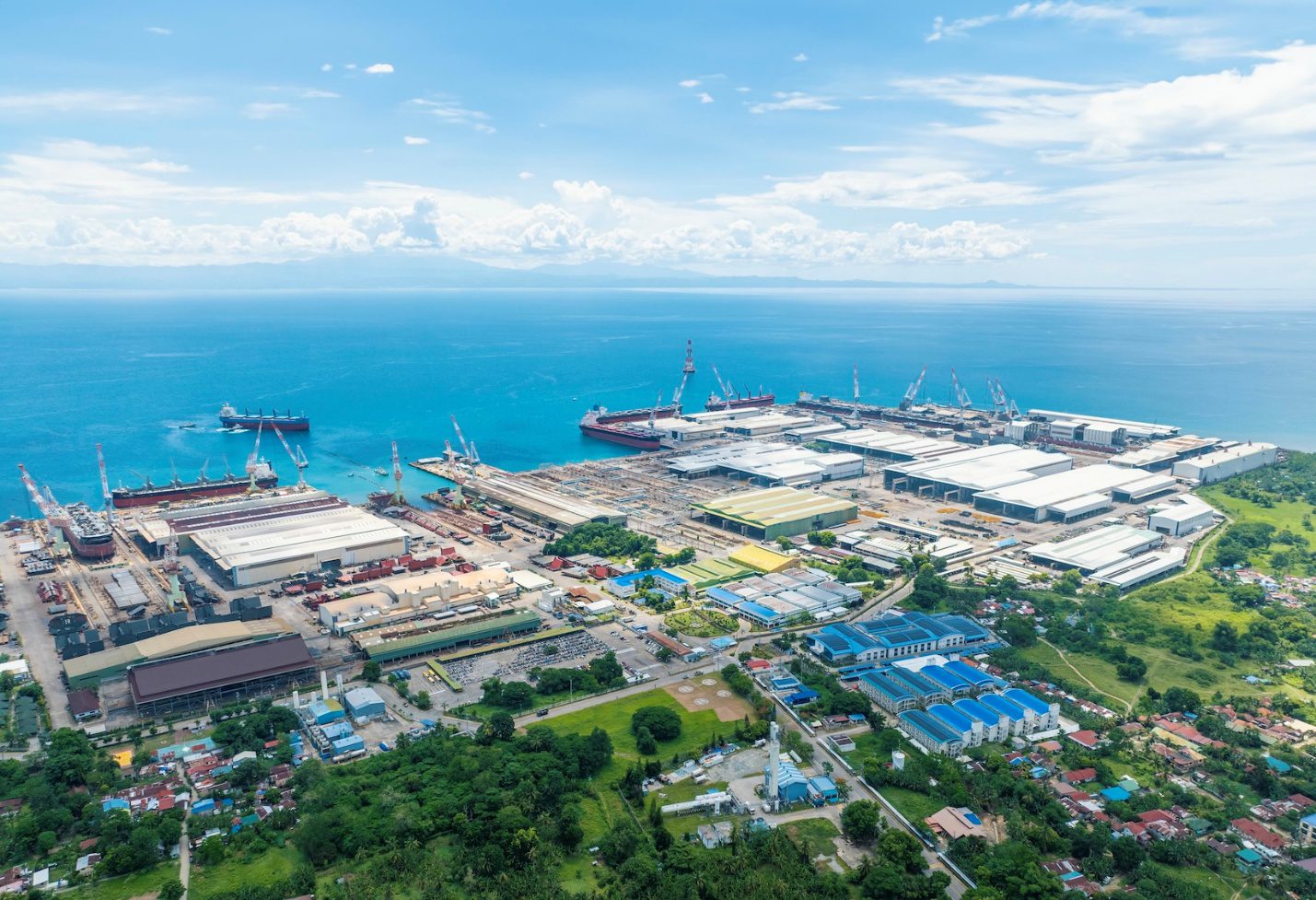

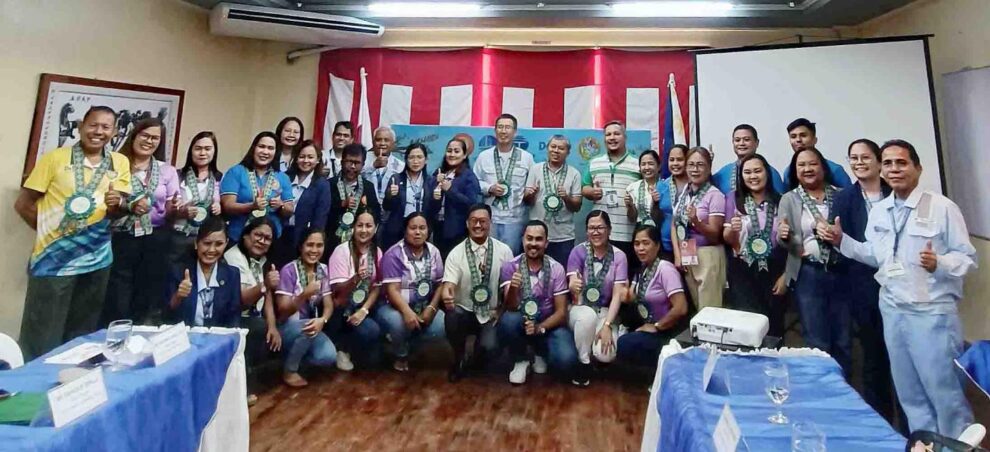

The Plastic Buster Program of Taiheiyo Cement Philippines, Inc. (TCPI) that started among employees has expanded to all public schools in San Fernando town.
This developed following the signing of a memorandum of agreement (MOA) with the Department of Education (DepEd) on Nov. 12, 2025, at the company’s administration conference room.
Dwight P. Avila, manager for environment and safety, announced the initiative now covers 15 schools across DepEd’s Districts 1 and 2, marking a significant step in deepening environmental awareness among the youth.
The expanded program is meant to strengthen community-based solid waste management, anchoring hopes in the youth to carry on the efforts to keep their environment clean and healthy.
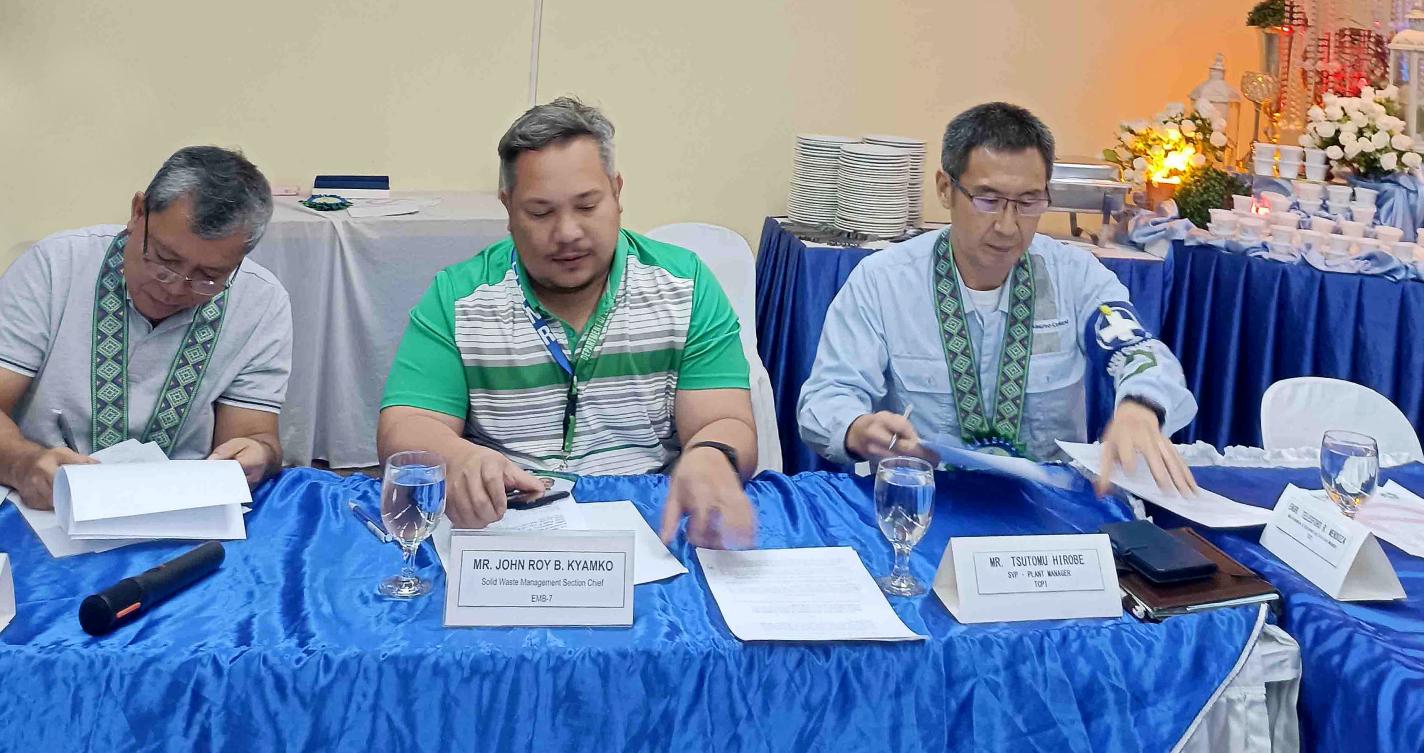
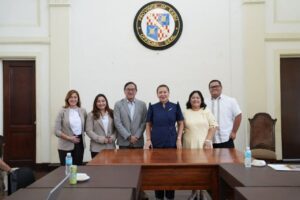
Agreement. San Fernando MENRO Nelson Soronio, EMB-7 Ecological Solid Waste Management Section chief John Roy B. Kyamko and TCPI SVP and plant manager Tsutomu Hirobe sign the MOA to promote Plastic Busters.
San Fernando District II supervisor Jenelyn Craste signed the MOA on behalf of DepEd in front of school principals from both districts and officials of Cebu Technology University (CTU).
Eng’r. Mary Ellen Camarillo, dean of the College of Engineering at CTU Argao, witnessed the signing with CTU San Fernando campus director Wilfredo G. Anoos, dean of instruction Stevie B. Manugas, and faculty member Leila Pinatil.
John Roy B. Kyamko, chief of the Ecological Solid Waste Management Section of the Environment Management Bureau, also witnessed the milestone, hopeful it will result in positive changes in the community.
Early responsibility
The partnership highlighted the growing collaboration among the education sector, government agencies, and private industry in promoting sustainability at the grassroots level, noted Avila.
“The expansion of the Plastic Buster Program reflects our belief that environmental responsibility must start early,” Avila said.
“By involving schools and students, we are planting the seeds of discipline and environmental consciousness that can extend from the classroom to households and the wider community,” he added.
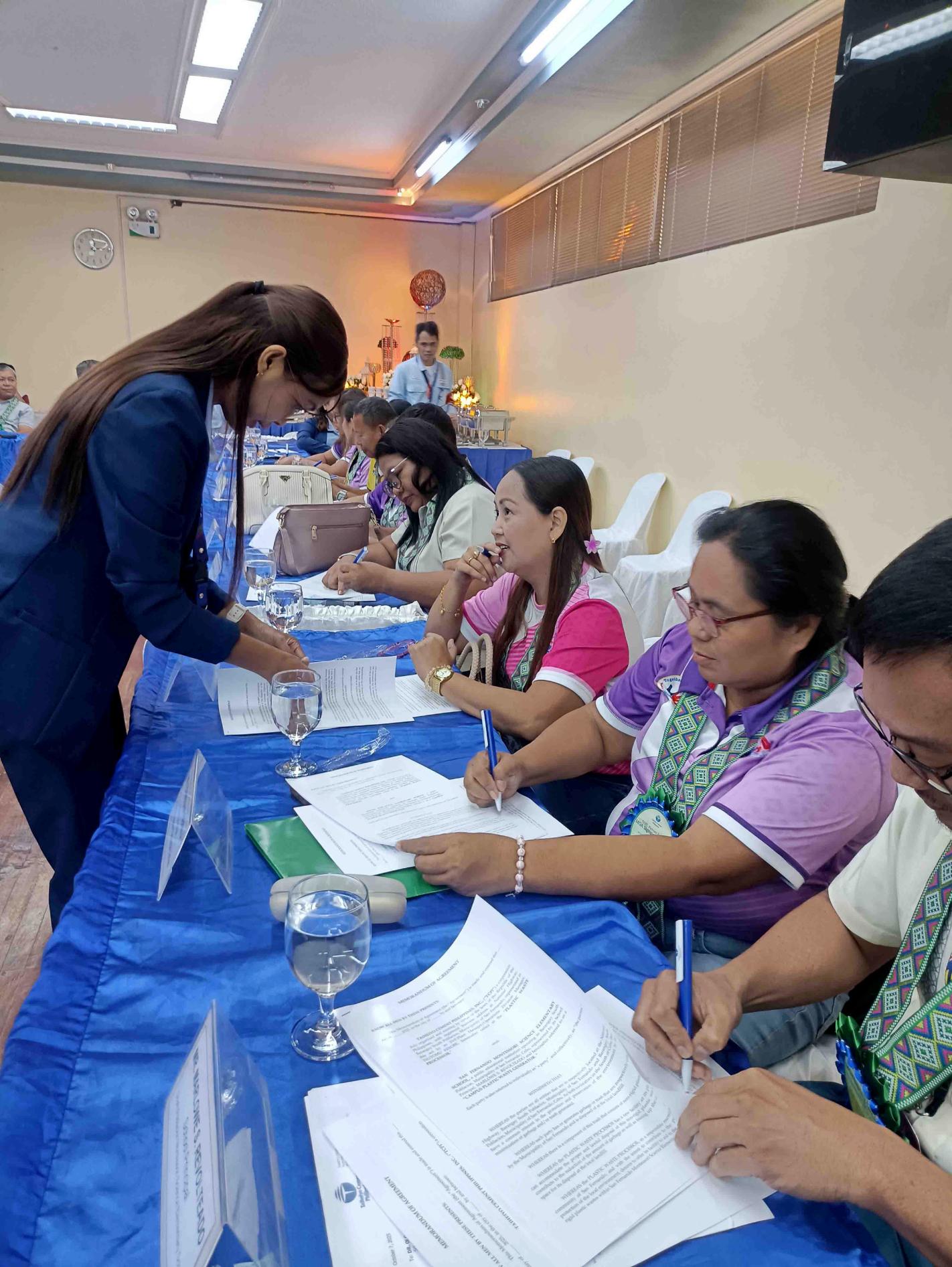
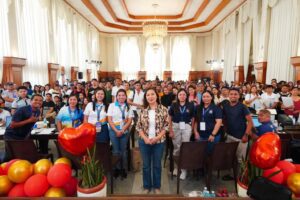
Educators. Some of the school heads in San Fernando sign the MOA to promote Plastic Busters.
Under the program, students and schools are encouraged to practice proper waste segregation, particularly the collection of non-rigid plastic wastes.
These plastics are then utilized as alternative fuel in TCPI’s cement production process, helping reduce waste sent to landfills while supporting more sustainable industrial practices, Avila shared.
Marlowe S. Revolteado, principal of San Fernando Montessori Science Elementary School, bared TCPI’s program is attuned to DepEd’s advocacy on environmental protection and conservation.
“We give our best efforts in dealing (with) garbage in the manner (that) we can manage. However, it is heartbreaking to see that most garbage only ends up in landfills,” he noted.
With the program, he said the educators’ passion to help save the environment has been reignited. “We are driven to lead our learners to take part in this undertaking knowing that they deserve a clean, safe and sustainable environment,” he said.
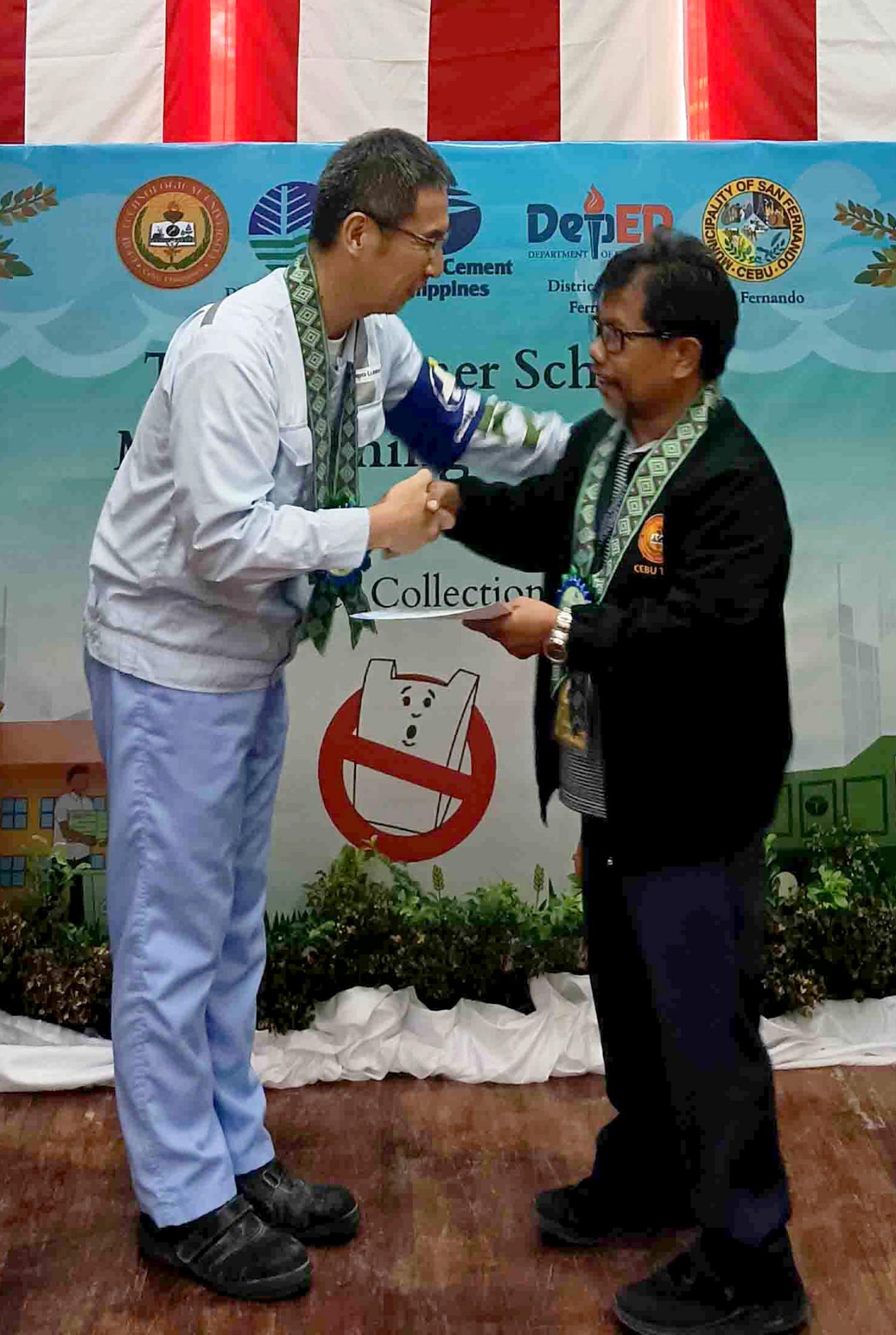
Gratitude. TCPI SVP Tsutomu Hirobe manifests his appreciation to CTU San Fernando campus director Wilfredo G. Anoos for committing to promote Plastic Busfers among university students.
Agents of change
The latest expansion builds on the program’s steady growth since its launch in June 2024 within TCPI premises.
Initially participated in by employees and personnel of suppliers and allied companies, the Plastic Buster Program began as a weekly initiative encouraging workers to bring clean and dry plastic waste from home.
In its second phase, TCPI piloted the program in the community through student leaders of South Poblacion National High School – Math & Science School (SPNHS-MSS).
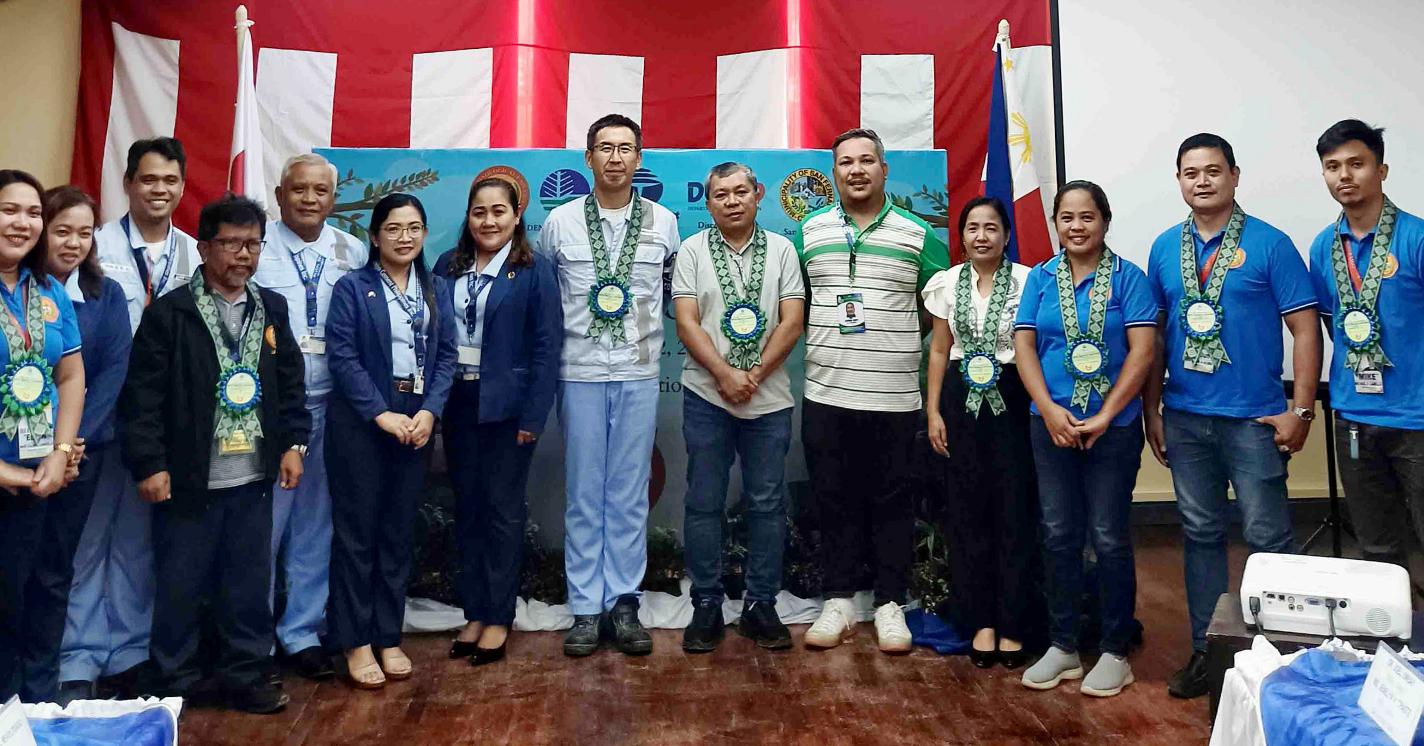
Plastic Busters of Cebu Technical University – San Fernando campus.
The positive response from the pilot school demonstrated how students can become effective environmental advocates, influencing practices not only in school but also at home.
“Children can be powerful agents of change,” Avila noted. “When they understand why proper waste management matters, they bring that mindset to their families. That’s how we address the problem at its source.”
With the town-wide rollout, TCPI and its partners aim to nurture what Avila described as “green thumbs” among young learners, a mindset that values environmental protection, discipline, and sustainability as everyday habits.
Indeed, the lead educators, particularly those who witnessed the signing, have expressed their commitment to promote the program in their respective elementary schools (ES), national high schools (NHS) and technical vocational schools (TVS).
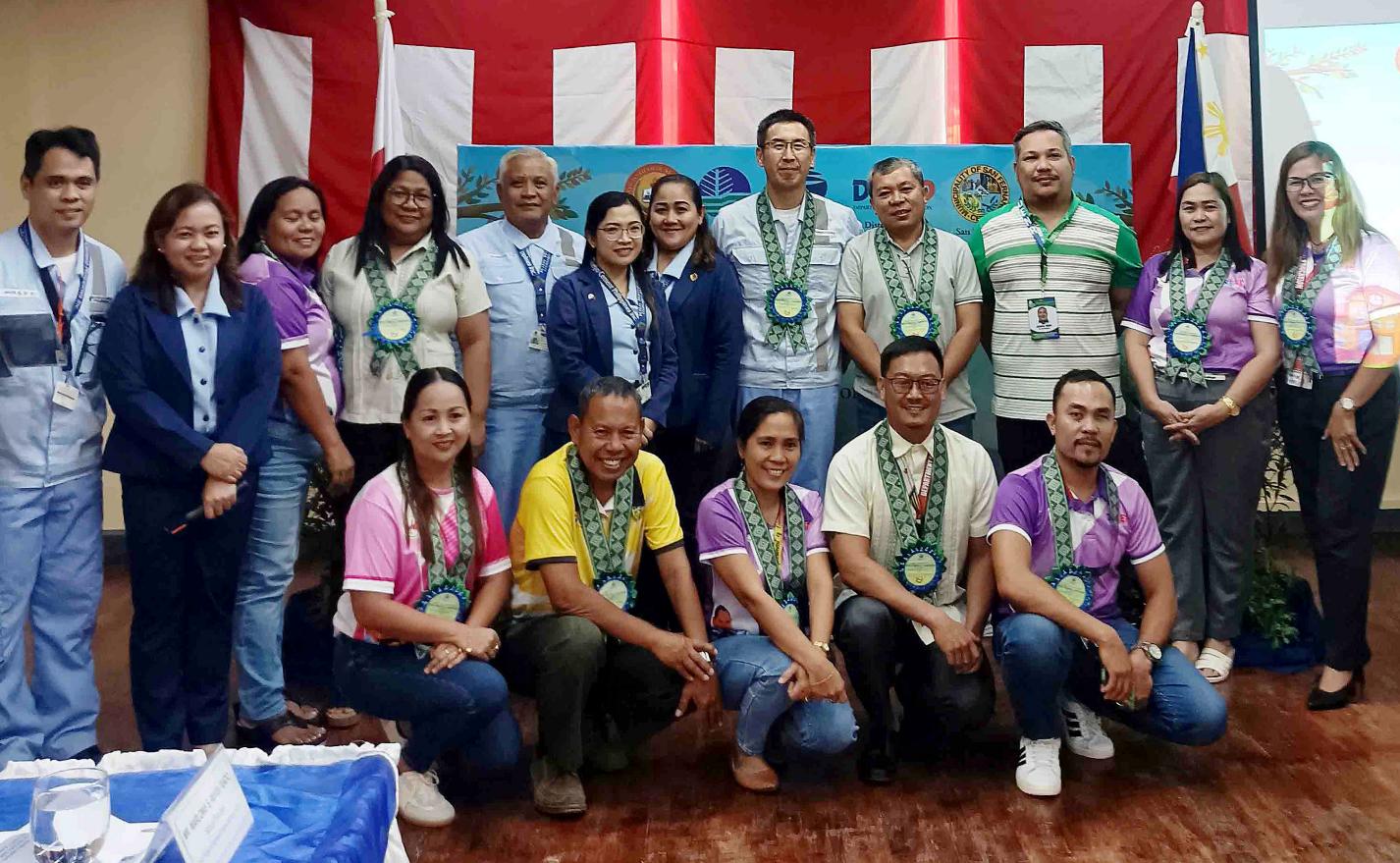
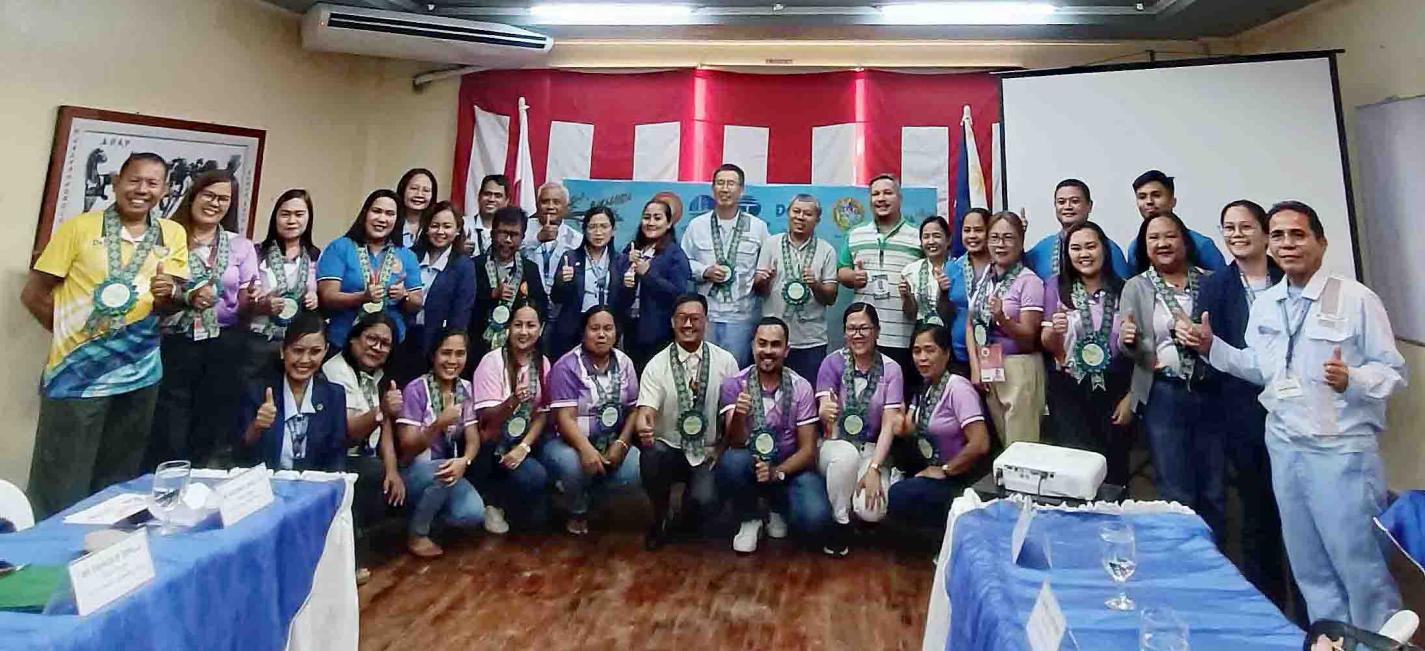
Plastic Busters of DepEd San Fernando District 1.
They include the principals of:
Balud ES principal – Dr. Judy Tapere
Catalina Lapus-Omega NHS – Dr. Lowella C. Capangpangan
Pitalo ES – Isidro M. Catina
Pitalo NHS – Dr. Nanette D. Ymalay
Ricardo Reluya Jr. TVS – Ernesto T. Estrelloso
San Fernando Central – Florinda M. Soronio
San Fernando NHS – Kathleen Marie P. Gencono
San Isidro ES – Alford G. Magdogo with school teacher Liezel Sebial
Sangat ES – Dr. Marissa S. Deipariene
Sangat NHS – Rosemariwen Renes
South Poblacion ES – Evaniza M. Genilla
South Poblacion NHS Math & Science School – Dr. Olga C. Fernandez
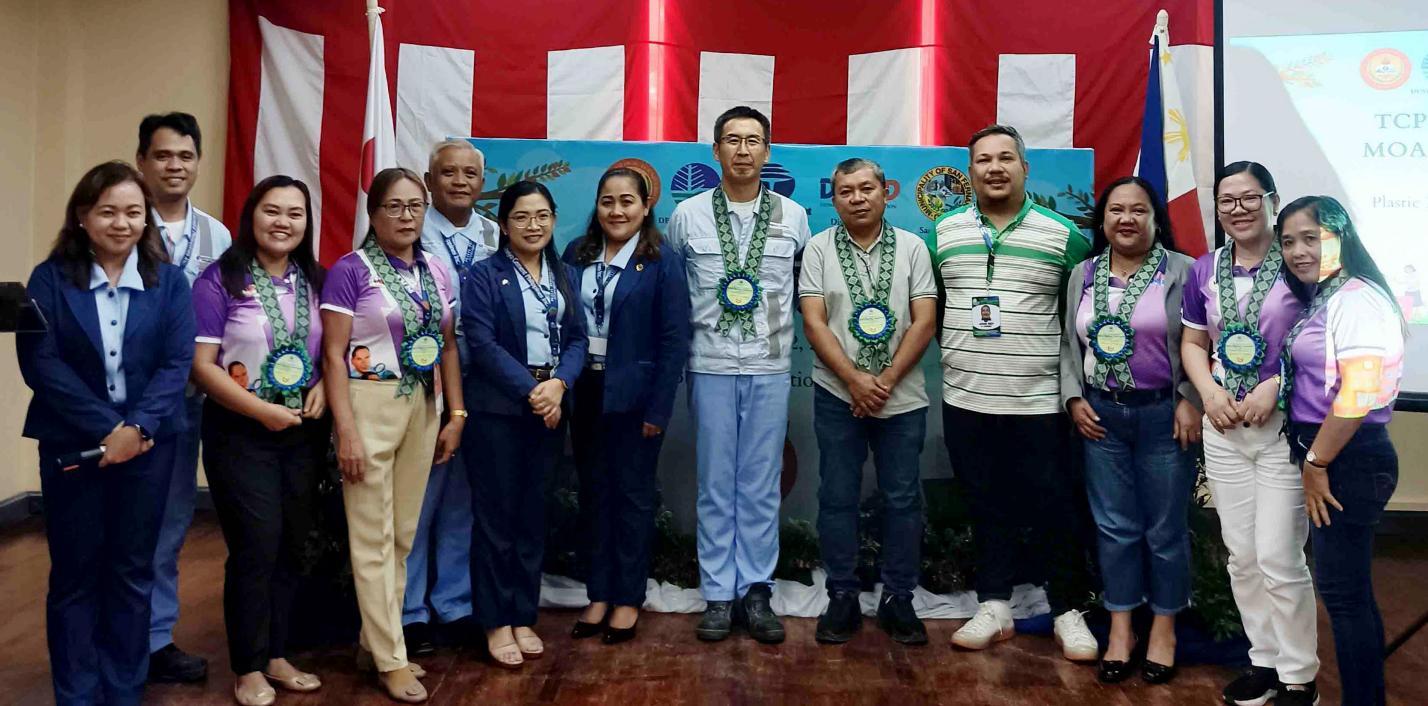
Plastic Busters of DepEd San Fernando District 2.
Beyond reducing plastic waste, the Plastic Buster Program supports TCPI’s commitment to its Environmental Management System, certified under ISO 14001 since 2006, and aligns with Republic Act No. 11898, the Extended Producer Responsibility (EPR) Act of 2022.
Through the expanded partnership, TCPI, schools, and local institutions reaffirmed their shared commitment to building a cleaner, greener, and safer San Fernando, while educating the next generation on practices that will benefit both present and future communities.