



Preparing Cebu to be an ideal destination for Japanese investors is not a matter of promotion, but of credibility. For Cebu Chamber of Commerce and Industry President Jay Yuvallos, the foundation lies in trust, discipline and long-term thinking—values he believes must consistently guide Cebu’s development.
Yuvallos, an entrepreneur who transitioned from furniture exports into logistics, warehousing and real estate, describes Cebu’s relationship with Japan as one that has matured through decades of business engagement and cultural exchange.
“More than the economic side, the social and cultural relationship is very alive,” he said. “There is trust there. And trust is the foundation of business.”
Cebu hosts several Japanese companies, particularly in manufacturing, shipbuilding and export processing zones, alongside a visible Japanese presence in food, retail and services. While Japanese tourism and investment slowed during the pandemic and have not yet fully returned to pre-pandemic levels, the fundamentals of the relationship remain strong, supported by familiarity, business confidence and people-to-people ties.
Looking ahead, the Cebu Chamber sees growing opportunity in creative industries such as animation, game development and digital entertainment. Cebu already has firms providing subcontract services to Japanese and U.S. companies, reflecting a deep pool of creative and technical talent. The Chamber’s focus is now on helping local companies move beyond subcontracting toward higher-value partnerships.
This transition is closely tied to alignment with Japanese business standards. As Japan faces workforce constraints driven by an aging population, demand continues to grow for reliable partners that can deliver quality, scale and consistency. Cebu, Yuvallos believes, is well positioned to respond—provided it maintains discipline in execution.
To reinforce this, the Chamber has emphasized punctuality, structure and accountability across its programs. Events begin strictly on time, schedules are adhered to, and expectations are clearly defined, reflecting the professional standards expected in Japanese business environments.
Beyond creative industries, Cebu’s broader economic role continues to expand. Despite repeated challenges, including natural disasters and infrastructure gaps, the region has consistently recorded growth rates above the national average. This resilience is rooted in a business community that remains engaged and collaborative, even across competing interests.
As the Philippines and Japan mark 70 years of diplomatic relations, the Cebu Chamber is turning its attention to long-term cooperation in infrastructure, urban planning and climate resilience. In early 2026, it will lead a multi-sector delegation to Japan composed of business leaders and local government officials to study Japanese approaches to flood control, urban planning and infrastructure governance.
At home, the Chamber is grounding its vision through tangible investments. It recently broke ground on a new phase of development at its headquarters, with construction set to commence on facilities designed to support innovation, collaboration and long-term capacity building for Cebu’s business community.
Part of the Chamber’s existing building is also being converted into an innovation hub that will house climate resilience programs, academe-industry collaboration, startup pitching spaces and SME showrooms, creating a platform for shared problem-solving and practical cooperation.
“These are real things,” Yuvallos said. “Not just plans.”
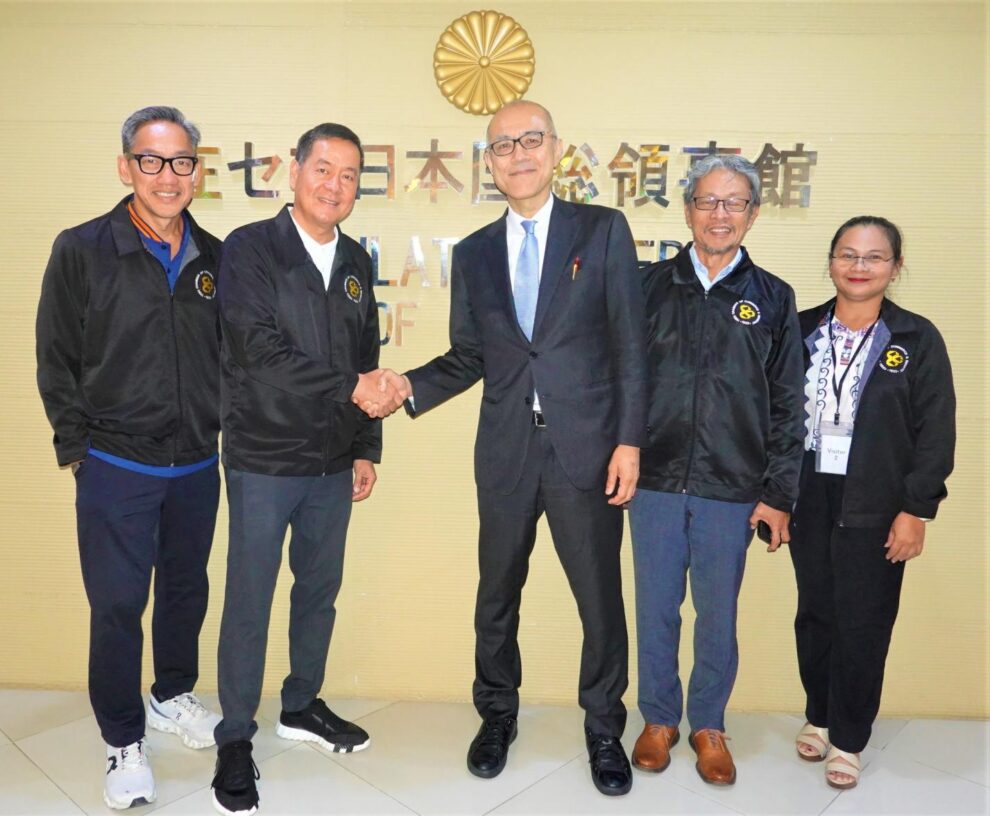
Photo by: Consulate General of Japan in Cebu