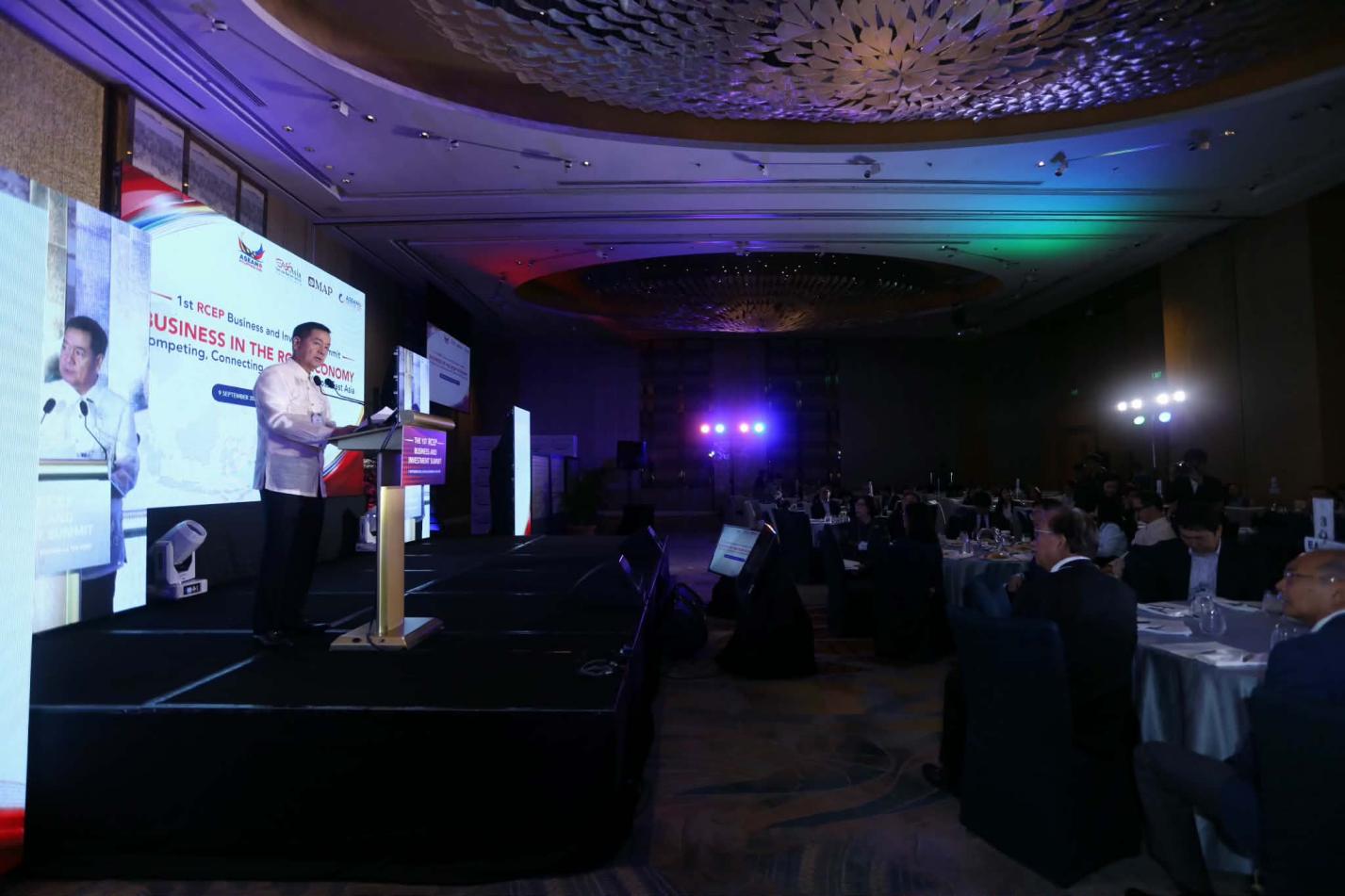


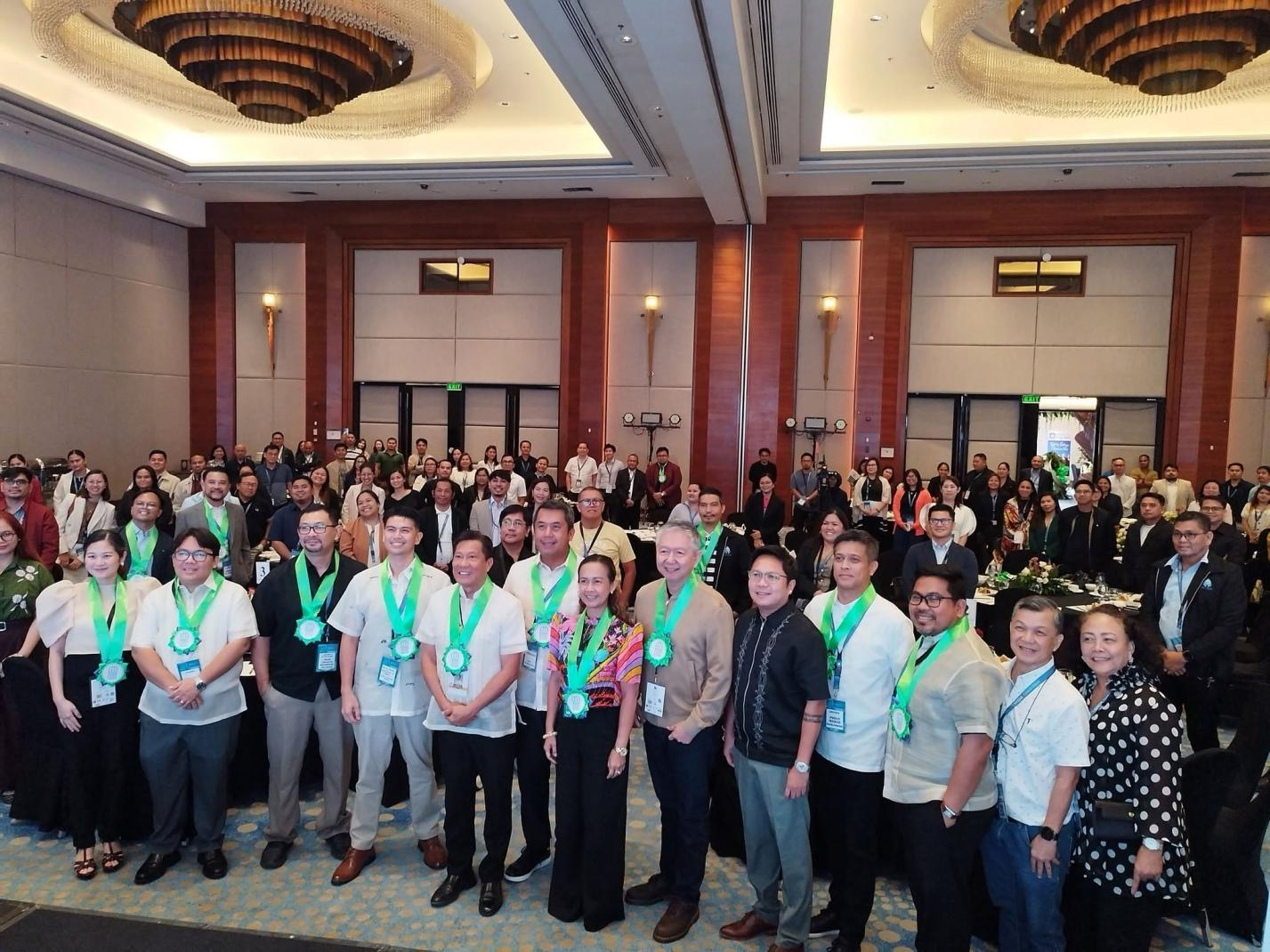



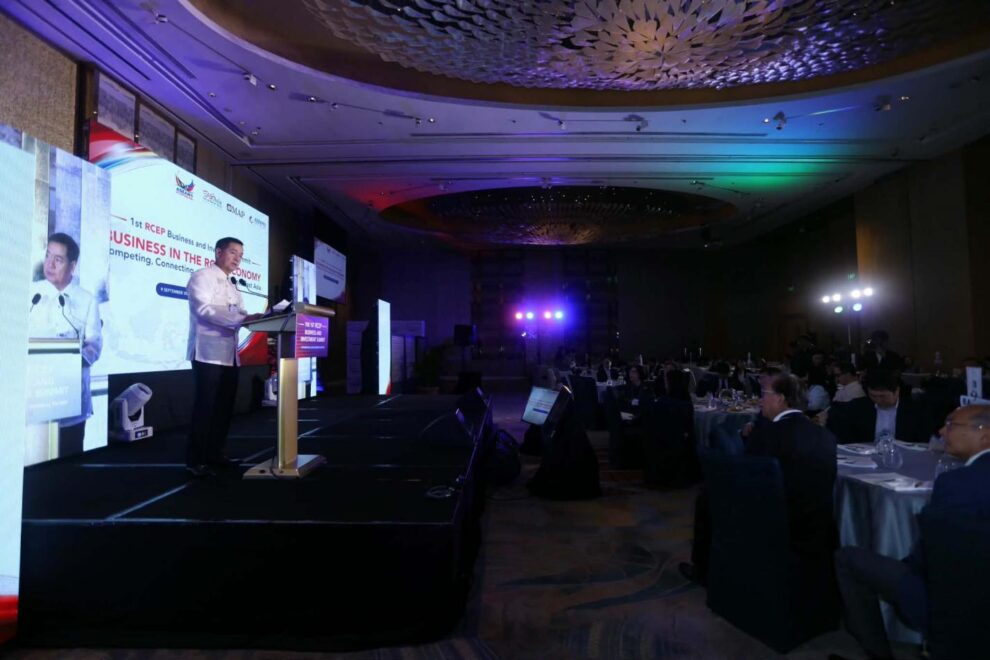

MANILA, Philippines — As members of the Regional Comprehensive Economic Partnership (RCEP) prepare for the agreement’s first General Review, the East Asia Business Council (EABC) convened the inaugural RCEP Business and Investment Summit in Manila, bringing together business leaders, policymakers, economists, and regional stakeholders to examine how the Philippines and the wider region can strengthen economic integration amid a more uncertain global trading environment.
Held under the Philippine co-leadership of EABC, the summit comes as businesses contend with geopolitical tensions, renewed protectionism, tariff disruptions, and increasingly vulnerable supply chains that are reshaping how companies approach trade and investment.
Opening the summit, EABC Chairperson Jay Yuvallos said businesses must rethink how they participate in an increasingly interconnected but exposed global economy.
“The business model that served us for decades was built around ‘Just-in-time.’ Now, ‘Just-in-time’ must increasingly be matched with ‘Just-in-case,’” Yuvallos said. “In other words, resilience has to become part of how we design our value chains.”
Yuvallos said the challenge is no longer whether businesses should participate in global trade, but how economies can remain competitive and continue to grow when global trade is disrupted.
“This is where I believe regional integration becomes a strategic advantage,” he said.
Yuvallos emphasized that the value of RCEP should be measured not only by the agreement itself, but by how effectively businesses, governments, investors, and institutions use the regional architecture it provides.
Making RCEP work for business
For the business community, the upcoming General Review provides an opportunity to examine how RCEP can better respond to the practical realities businesses face when operating across borders.
While tariff preferences remain important, businesses must also navigate customs procedures, standards, documentation, logistics, financing, and other requirements that can determine whether formal market access translates into actual commercial opportunities.
Department of Trade and Industry Secretary Ma. Cristina A. Roque urged businesses to provide the government with concrete feedback on the barriers they encounter as the Philippines prepares for the RCEP General Review.
“We need your feedback. Tell us what needs to work better—customs procedures, sourcing requirements, and other barriers that affect your operations,” Roque said, stressing the need for government and business to work together to make trade agreements more practical, responsive, and relevant to business plans.
Roque also underscored the importance of maximizing the Philippines’ existing trade agreements and strengthening the country’s export performance.
The Philippines recorded strong export growth in 2025, with exports up 15.4% to an all-time high.
Roque said these gains demonstrate the capacity of Philippine products to compete in global markets, but emphasized that trade agreements create opportunities only if businesses can use them.
“These FTAs remain as agreements unless we maximize or use their full potential,” Roque said, calling for closer collaboration between the Philippine government and the private sector to communicate the benefits of trade agreements and help businesses take advantage of them.
The secretary also pointed to RCEP’s potential to give businesses access to a market of more than 2.3 billion people, while allowing companies to diversify suppliers, expand production networks, and reach more customers.
Positioning the Philippines in the ASEAN+3 economy
The summit also examined the Philippines’ position within the wider ASEAN+3 (ASEAN plus China, Japan, and Republic of Korea) economic space, which is increasingly becoming not only a major production base but also a significant regional market and investment destination.
The Philippines already participates in 23 free trade agreements and has established export strengths in sectors including semiconductors and agriculture.
The challenge, summit participants noted, is to build on these strengths by connecting Philippine businesses more deeply to regional supply chains and investment networks.
This includes identifying opportunities for the country to move into higher-value segments of regional production while strengthening the systems that allow Philippine businesses to connect with regional markets.
Bringing MSMEs into the regional economy
The summit also highlighted the need to ensure that smaller businesses can benefit from regional integration.
For many micro, small, and medium enterprises (MSMEs), becoming a direct exporter remains difficult. Still, participation in the regional economy can take other forms, including serving as suppliers, distributors, service providers, and partners within regional value chains.
Roque highlighted the government’s ongoing efforts to give MSMEs greater market access and connect them to opportunities through private-sector initiatives.
Yuvallos similarly stressed the need to make it easier for MSMEs to understand and use the opportunities created by RCEP.
“We need businesses—especially our MSMEs—to participate in regional value chains, and we need to make it easier for companies to understand and actually use the opportunities that RCEP provides,” Yuvallos said.
The summit brought these issues together around a broader question for the Philippines: where does the country want to sit in East Asia’s growth story, and what systems are needed to get there?
As the RCEP General Review approaches, EABC said the business community should play an active role in shaping the next phase of regional integration—not only by identifying barriers, but by advancing concrete solutions that strengthen connectivity, investment, competitiveness, and resilience.
“The future of regional integration will not be written by agreements alone. It will be built by the businesses, institutions, and people who choose to connect,” Yuvallos said.